

FUE Hair Transplant in Ann Arbor
Many men and women suffer from either pattern baldness or thinning hair. In the United States, around 50 million men and 30 million women experience one of these conditions. Typically, by the time people recognize that they are losing their hair, 50 percent of their hair has already fallen out. At this point, many begin exploring options for a hair transplant in Michigan and schedule a consultation with a hair restoration specialist.
Michigan’s Dr. Pramit Malhotra understands that it is natural to be fearful of the appearance of hair plugs, but this technique hasn’t been used in 25 years. The current techniques allow hair restoration to be an essentially undetectable procedure once the transplanted hair grows in. Dr. Pramit Malhotra himself has had a hair transplantation procedure so he understands what looks natural and undetectable.
FUE Hair Transplant At a Glance
- Procedure:
- In-office
- Anesthesia:
- Local anesthesia with optional oral sedation
- Recovery:
- Minimal downtime; most return to non-strenuous work in 1–2 days
- Results:
- New growth begins around 3–4 months and continues improving up to 12–18 months
- Cost:
- Typically $9,000–$18,000 depending on graft count
Select a section to jump to
- Every Head of Hair is Different
- Where Does the New Growth After Hair Restoration Come From?
- FUE vs. FUT for Hair Transplant
- Follicular Unit Transplantation with FUE
- What Does a Hair Restoration Consultation Involve?
- Who is a Good Candidate?
- The Hair Restoration Procedure at Ann Arbor Plastic Surgery
- Hypothermasol Holding Solution
- Hair Restoration Recovery
- Choosing a Plastic Surgeon for Hair Restoration in Ann Arbor
- Experience and Track Record
- Hair Transplant FAQ
- Learn More About Hair Restoration in Ann Arbor, MI
Every Head of Hair is Different
All of the best hair transplant surgeons will tell you that each hair restoration case is unique. People have different types of hair, ranging from straight to curly, thick to thin, dense to sparse, and in a variety of hues.
It is notable that men typically lose hair in a predictable way, known as male pattern baldness. Women can suffer from female pattern baldness, but most females experiencing hair loss will see a diffuse thinning of all of their hair. For men and women, the hair loss is usually a combination of genetic factors and their sensitivity to a hormone called DHT.
Where Does the New Growth After a Michigan Hair Transplant Come From?
The source of your new hair is your own body. Unlike organ transplants, where a person receives a new part from a donor, you will get a hair transplant from yourself. In pattern baldness, the hair stops growing in such areas as the crown, top, and front of the head, but it continues to thrive on the back and sides of the head. This hair is genetically programmed to be maintained and is not typically lost, even in severe cases of balding, making it a great source of donor hair. Typically, about 25% of the hair is harvested from the donor area leaving 75% behind. The hair in the donor area will not grow back. Consequently, the hair donor area is less thick but this is not noticeable. Most patients can cut their hair back to a 1 or 2 guard without any sign of visible scarring.
Links with answers to commonly asked questions

FUE vs. FUT for Hair Transplant
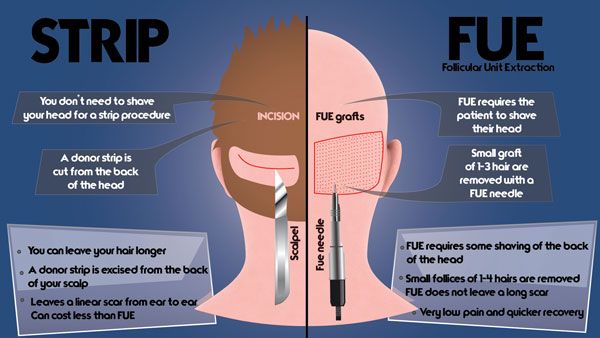
When trying to choose the best method for a hair transplant in Michigan, patients tend to consider the two main options available today: Follicular Unit Extraction (FUE) and Follicular Unit Transplantation (FUT). Both hair transplant types have their own unique advantages and a few potential drawbacks. However, FUE is the far more common technique now accounting for 80% or more of hair transplants.
Follicular Unit Extraction
FUE has a number of advantages, including the following:
- Little to no scarring in either the donor or recipient area; any scars are tiny, around the size of pinpricks
- Faster healing time since there are no incisions
- No extended exercise restrictions after the hair transplant
- Little pain during and after the procedure
- Ideal for patients who want to wear their hair very short
This type of hair transplant surgery is ideal for people who have a very tight scalp since FUT can’t be done as successfully on such patients. People who don’t have appropriate donor hair on their scalp may be good candidates for FUE since the follicles could potentially be harvested from other areas of the body.
A potential drawback is that FUE harvests grafts from a fairly wide area of the lower scalp, whereas FUT focuses on harvesting only the middle scalp area. The mid-scalp has the strongest and longest-lasting hair, so hair transplant grafts taken from this area tend to be more successful upon transplantation. This means that FUT grafts may last longer, especially when the FUE uses a wide harvesting area to get sufficient follicles. It is critical that your plastic surgeon only harvest follicles from the safe donor area to achieve a long-lasting result.
What Is Follicular Unit Transplantation?
FUT has some significant advantages of its own, including the following:
- One single linear scar on the back of the scalp, which is typically covered by new hair growth very quickly
- May be more efficient for patients requiring more than 3,000 grafts in a single hair transplant session
- FUT is ideal for people who need large areas of scalp covered, as it harvests an entire strip of the scalp at one time
For many people, the main drawback of FUT is that the single long scar is larger than the tiny pinprick-sized scars associated with FUE. However, this disadvantage is offset by the scar’s location toward the middle of the scalp, where even short hair growth can cover it in a matter of weeks or months. FUT often does cause more pain, often necessitating pain medication or ibuprofen up to 10 days after the hair transplant, particularly if a staple closure is used. FUE has exploded in popularity and is projected to overtake FUT as the most common hair restoration procedure.

Understanding Follicular Unit Transplantation with FUE
Dr. Pramit Malhotra has personal experience with hair restoration techniques, and he chose FUE for his practice because of how easy it is for patients, the lack of telltale evidence after the procedure is complete, and, most importantly, its natural-looking and confidence-restoring results.
Dr. Malhotra had the old strip surgery before FUE became available but now feels that FUE is the best procedure for the majority of hair restoration patients. He feels that hair transplant surgery is one of the safest surgical procedures in cosmetic surgery (if not the safest), with the lowest complication rate and highest level of patient satisfaction.
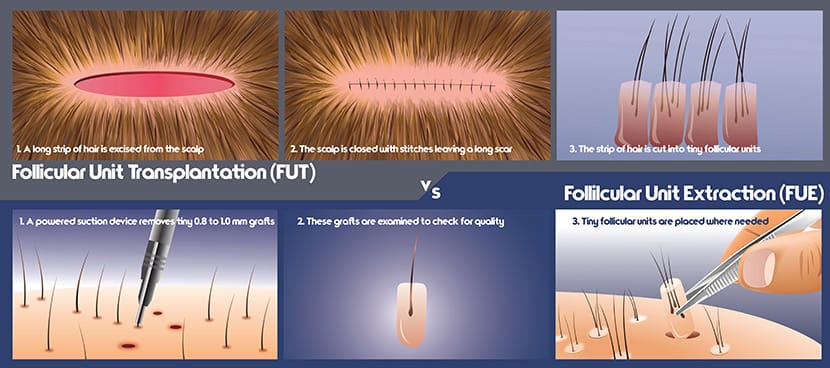
FUE is a unique method of harvesting hair follicles using the state–of–the–art FUE (Follicular Unit Extraction) technique.
The FUE device uses a punch to surround a follicle in the scalp, then removes it with suction, as opposed to pulling or twisting it out. The follicles chosen for collection are scattered throughout the donor area, so there is no obvious sign of their removal. While each follicle leaves behind a tiny, circular mark, there is no noticeable pattern to draw the eye, unlike with Follicular Unit Transplantation, which leaves evidence of collection in the form of a linear strip scar.
What Does an Ann Arbor Hair Transplant Consultation Involve?
Once you have determined that a hair transplant is right for you, it’s time to come in and have a consultation with Dr. Pramit Malhotra, who will lead you in a thorough medical examination.
Dr. Malhotra will determine how much hair you have available to donate or move from the back of your head to the areas where it’s needed. In addition, he will talk with you about your hair restoration goals.
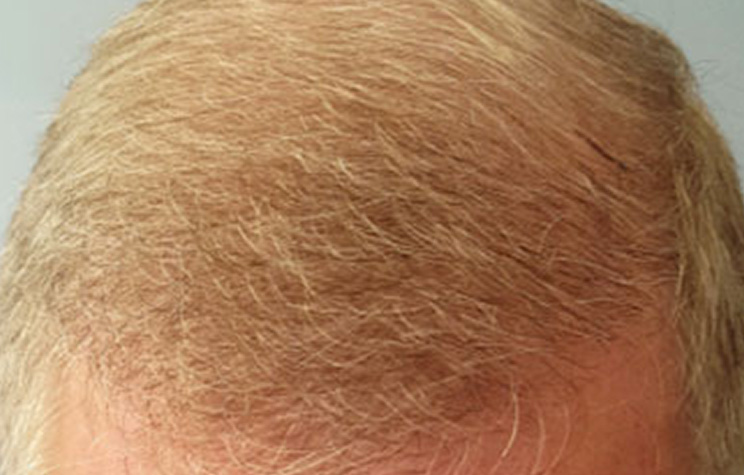
After an initial consultation, you will work with Dr. Malhotra to draw out a proposed new hairline. There is considerable artistry involved in this design, so it is important for patients to discuss their problem areas and goals with Dr. Malhotra.
 Before
  After
After Who Is a Good Candidate for FUE?
Most patients will qualify for FUE hair restoration, provided that they are healthy and have realistic expectations for their results. The procedure is recommended for those with the following characteristics:
- A naturally receding hairline
- Areas of balding in the middle scalp and crown
Dr. Malhotra will perform a thorough evaluation during your private consultation to ensure that enough donor follicles are available to make your hair restoration procedure successful.

Why Choose Dr. Malhotra
Dr. Malhotra is one of a select few plastic surgeons who are double-board-certified in plastic surgery and otolaryngology. Dr. Malhotra underwent an educational path that required 11 years of training. He has been inducted into the American Society of Plastic Surgeons as an honorary member. He specializes in hair restoration. Dr. Malhotra has been recognized by his patients as one of the top Michigan plastic surgeons, and has received the Best of Ann Arbor Award for Four Consecutive Years for cosmetic surgery.
Hair Transplant Procedure in Ann Arbor
Getting started
Due to the length of the procedure, most patients should plan to spend a full day in the office. The procedure can last about six to eight hours. Dr. Malhotra will start by using a cosmetic wax marking pen to draw where the hairline will begin on the forehead, how the recession in the temples will be addressed, and how to achieve maximum hair density with the number of grafts allotted.
The hair will be trimmed so that the hair follicles can be viewed. A special antibiotic wash is used in the hair to decrease the chance of infection during the FUE procedure. Since the areas of skin removal are so small, the chance of infection is quite low: less than 1 percent.
Numbing the scalp
Next, local anesthetic is administered to numb the scalp. Many of our patients are self-declared “wimps with pain,” so a specific mixture is used to make the numbing process quite easy. All areas are tested before the procedure begins, which allows the technician to confirm the patient is completely pain-free.
Extracting the donor follicles
The technician will first remove follicles from the “donor” area at the back of the scalp. Since each follicle has one to four hairs, only about a quarter of the hairs from the donor area will be harvested. The follicles will then be carefully separated. The hair restoration team uses a small motorized instrument called a punch to score the skin around each follicular unit set to be relocated.
Next, the suction device sucks the graft into the punch. This is typically done with the patient in a face-down, massage-type position and is painless once the anesthetic has taken effect. Approximately 400 to 700 grafts are harvested per hour, so this process typically takes two to four hours. After the grafts are harvested, the patient enjoys a short lunch and bathroom break.
Creating your ideal hairline
The technician then creates the hairline by making small incisions in the top of the head where the hair implants will be placed. The angle of the recipient sites is critical to maximize the effect of the hairs placed. A 1,000-graft hair restoration session done extremely well can look better than a 2,000-graft session done with poor skill and artistry.
Finally, the Ann Arbor hair restoration team will individually insert each follicle into the scalp where hair is thinning or missing. Since the transplanted follicles are the patient’s own, they are healthy and vibrant. Once grown out, they will be permanent since the hairs retain their genetic programming from their origins in the “horseshoe” area, which keeps them from falling out. This process is painless, and patients typically watch movies during this portion of the procedure. Due to the effect of the Valium used for the procedure, some patients even sleep intermittently throughout the FUE process or listen to music of their choice.
Hair Restoration Graft Quality and Preservation
The importance of the preservation and quality of the hair graft during the FUE hair transplant process is explained here.

Hypothermasol Holding Solution
FUE hair grafts are thinner and can dry out quicker than FUT grafts so the holding solution creates an almost gelatinous-like coating on the graft to keep moisture in.
Hypothermasol coats the grafts, and they are often easier to place because they glide into the recipient site in the hairline with less pressure.
There have been some reports of grafts living for several days outside of the body and just in Hypothermasol solution. Our goal is to place all grafts within 6 hours of harvest.
Hair Transplant Recovery
The Day of Procedure
Patients often take Tylenol for pain control for 24 to 48 hours after FUE hair restoration. They are often surprised at how easy the recovery is. A dressing will be placed for one or two days after the hair restoration procedure. Once this is removed, the patient may shower. An ointment will be applied to the donor area, and a moistening spray will coat the graft area.
The Day After
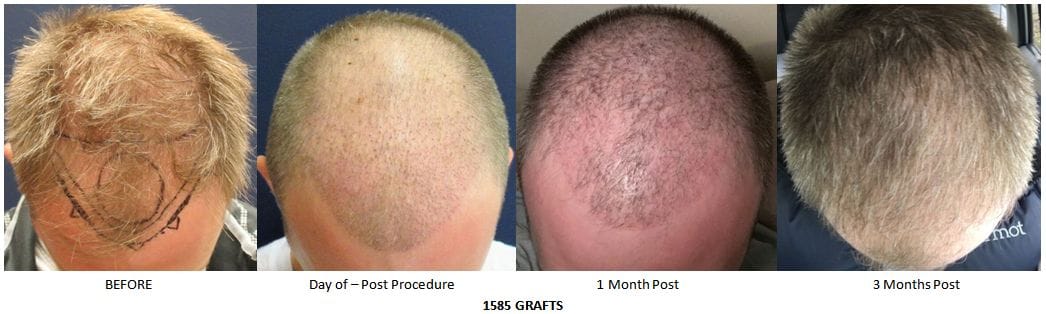
One day after the FUE procedure, patients will have incisions that may look similar to a rash. Small pin-sized scabs will appear on the second day. Generally, these last two to six days. Approximately one week after the FUE procedure, the patient may begin washing the scalp carefully, using only the finger pads.
Three-Six Months After
After four months, the transplanted hair will begin to grow. Remember, however, that every FUE patient is unique. The hair will continue to thicken and lengthen. At this stage, the scalp may become itchy. This is normal and is due to healing process. By the five- to six-month stage, the patient will notice considerable growth. Typically, approximately 50 to 60 percent of the visual change will have taken effect. The look will continue to improve for up to 18 months after the FUE procedure.
Choosing a Plastic Surgeon for Hair Transplant in Ann Arbor
Selecting a plastic surgeon for hair restoration is not a process to be taken lightly. You will be changing your appearance, and it’s important to work with a plastic surgeon who is well acquainted with hairline design and has an artistic touch to produce a result that looks completely natural. At Ann Arbor Plastic Surgery, our hair restoration goal is simple: If you still have some existing hair on your head, the transplanted hair should be distinguishable from the hair already in place. A hairline must be created to suit your face and look natural not only now but as you age. The key skill that differentiates average surgeons from excellent surgeons is how the hairline is designed.

Experience and Track Record
As is the case with any medical procedure, it pays to do comparisons before you commit to working with a physician for your hair restoration.
As you choose a provider, you really are choosing a team of individuals to help you meet your hair restoration goals. Each person has a specific and important role to make sure every step is followed to maximize your comfort and results. The patient care coordinator will serve as your main contact in the practice to answer your questions, calm your nerves, and make the process effortless. The surgeon will provide expertise and artistry for the procedure. The hair transplant technicians will make sure the grafts are harvested and placed without trauma so that they will grow into beautiful, thick hair.
It is important that you find out in what field the physician you are considering completed their “residency” or training. Many physicians in hair restoration are not plastic surgeons. If a person is not a plastic surgeon but is very experienced in hair restoration, we recommend you have an in-person consultation to confirm that you feel comfortable the office is professionally and safely run before proceeding.
In the end, choose a surgeon who is known in the hair restoration industry for knowledge, expertise, and a devotion to helping patients achieve their best appearance.

Can Signs of a Hair Transplant Be Hidden?
The ability to completely hide your hair transplant depends on how much existing hair you have that can cover the grafts you received. Some patients may be able to shave the sides of their heads but leave the top of the hair from 1 to 3 inches, depending on density. These patients would be able to return to work in five to eight days after their hair restoration, and no one should notice anything unusual. There are also topical products that work quite well to hide the transplant. We also use a “hidden donor technique” for cases of 1200 to 1400 grafts or less, allowing a quick return to work, often even a weekend.
What Does FUE Cost?
Automated FUE hair transplant costs can vary widely from one patient to the next. Generally, the more grafts required, the higher the cost will be. Some FUE providers charge by the graft, while others charge by the session. The typical cost range is from $6,000 to $10,000, depending on how many follicles must be transplanted to reach the patient’s goals. The per-graft cost varies between $5 to $7 nationally.
At our clinic, the per-graft cost is structured as follows:
- 1000–1200 grafts: $7 per graft
- 1200–1700 grafts: $6 per graft
- 1700–1900 grafts: $5.50 per graft
- 2000–3400 grafts: $5 per graft
As of July 2025. Prices subject to change.How Many Hair Grafts Will I Need?
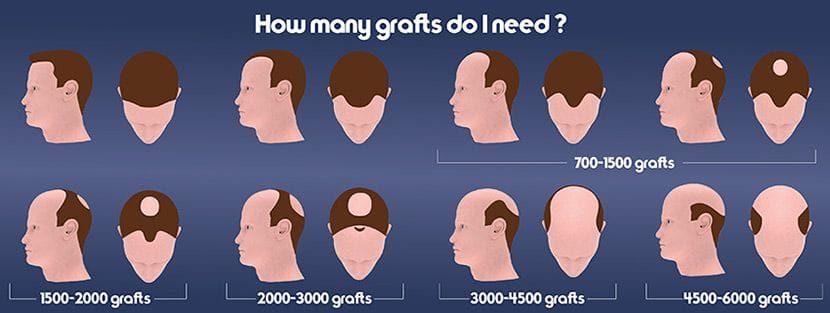
Someone who is almost completely bald and looking to completely replace a head of hair will need more hair grafts than someone who wants to fill in a bald spot. People start with about 20,000 hair follicular units. Once patients lose 50 percent of their hair, they will start to notice significant loss. However, with 4,000 to 6,000 hair grafts, an elegant hairline can be designed for someone who is bald. 500 hair grafts will cover an area about as big as a silver dollar. An area the size of a CD or DVD will require approximately 2,000 hair grafts. For denser or wider coverage, you’ll need more. Common goals in hair replacement include:
- Creating a clean frontal hairline to frame the face.
- Adding density to areas that are thinning or bald.
- Increasing density in an area where a hair transplant has already been performed.
After 10 to 12 months, you and your doctor can decide whether you want a second transplant to add more hair, which will require additional hair grafts.How Are the Hair Grafts Maximized?
The angle of implantation of each graft is very important. If the angle of the implanted hair is maximized, you can create a roof shingle effect that covers the scalp with the least amount of hair. This is why certain 2,000 hair graft surgeries from one surgeon look so much fuller and more natural than surgeries performed by other surgeons. It’s important to keep hair restoration costs in mind when you are looking at what can and cannot be done. Typically, patients have about 6,000-lifetime hair grafts that can be harvested from their scalp. A typical hair restoration case is 2,000 hair grafts.
Will I Have Activity Restrictions During Recovery?
FUE hair transplantation using automated FUE allows for a fast recovery after treatment. Activity restrictions are minimal. We ask our patients to avoid intense activity for 10 days after treatment. Most workplace activities can be resumed in just one to two days.
Can Women Receive FUE Hair Transplant in Michigan?
If you have thinning hair, hair transplantation is a possibility, whether you’re a man or a woman. We treat many women with female hair loss at our Jackson and Ann Arbor locations.
Why Is Ann Arbor Plastic Surgery the Best Hair Restoration Near Me?
Many of our patients travel to Ann Arbor Plastic Surgery from across Michigan and around the country because of Dr. Malhotra’s natural-looking results. It’s worth traveling to achieve the results you want from your procedure.
Learn More About Hair Transplant in Ann Arbor, MI
Double board-certified plastic surgeon Dr. Pramit Malhotra can answer all your questions about a hair transplant in Michigan at Ann Arbor Plastic Surgery. In addition to our Ann Arbor location, we also offer this procedure at our Novi office for patient convenience. Schedule a Consultation Online Today.